The abortion pill works for women across all reproductive ages, but the experience is not identical for everyone. A woman in her early 20s and a woman in her mid-40s may follow the same protocol and still have noticeably different physical and emotional experiences. Understanding these differences, including what is rarely talked about openly, helps women feel more prepared and less caught off guard.
How the Abortion Pill Works
The standard regimen involves two medications. Mifepristone is taken first, blocking progesterone and causing the uterine lining to break down. Misoprostol is taken 24 to 48 hours later, triggering uterine contractions to expel the pregnancy. This combination is effective up to 10 weeks of gestation with a success rate of approximately 95 to 98 percent.
Both medications interact with the body’s existing hormonal environment, and that environment changes significantly across a woman’s reproductive years.
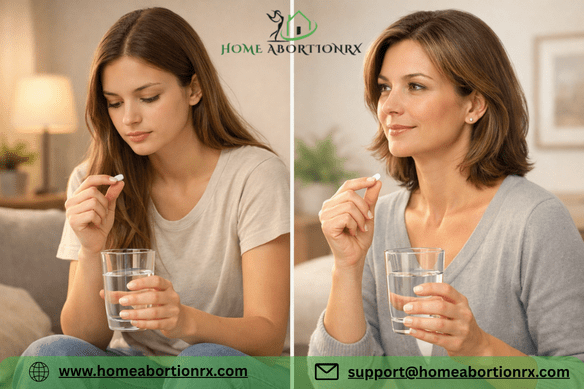
Women in Their 20s and 30s
Women in their late teens and 30s typically have stable hormone levels and regular cycles, which makes confirming gestational age straightforward and the medication more predictable in its response.
Physical Experience
Cramping and bleeding are the most common physical effects. It is worth being honest here: for many women, the cramping is significantly more intense than a typical period. Research shows that more than half of women undergoing medical abortion experience severe pain and many describe it as closer to labor contractions than menstrual cramps. Pain can last several hours and may feel temporarily disabling. Being mentally prepared for this possibility makes a real difference.
Nausea is also common, particularly after taking misoprostol. Some women vomit during the process, which can reduce the effectiveness of oral pain medication taken around the same time so timing pain relief correctly matters.
Bleeding typically resembles a heavy period and subsides within one to two weeks. Recovery is generally faster for younger women, with the menstrual cycle returning within four to six weeks and fertility restored promptly often within the first ovulation cycle.
Emotional Experience
For many young women, this may be the first experience with pregnancy. That alone can bring anxiety, relief, grief, or a complex mix of all three. Navigating the decision with or without a partner adds another layer. Privacy is often a priority, and having a trusted support person present during the process can make it significantly more manageable both physically and emotionally.
Women in Their 40s
Women in their 40s are often in or approaching perimenopause, where hormone levels fluctuate more unpredictably. This affects both the physical and emotional experience in meaningful ways.
Hormonal Fluctuations and Gestational Confirmation
Irregular periods make gestational age harder to confirm based on the last menstrual period alone. An ultrasound may be recommended before taking the medication to ensure it is used within the safe and effective window.
Physical Experience
Bleeding and cramping can be more intense in this age group particularly for women with fibroids, which are more common after 40. As with younger women, the pain can be more severe than anticipated. Managing this proactively is important: ibuprofen at an adequate dose is more effective than paracetamol, which research has found to be largely ineffective for abortion pain. Taking pain relief before cramping peaks rather than waiting until pain becomes severe significantly improves how manageable the process feels.
Pre-existing health conditions such as high blood pressure, clotting disorders, or thyroid issues and any medications used to manage them may also interact with mifepristone or misoprostol. A full review of medical history with a provider is especially important for this age group.
Recovery may take slightly longer, and the return of the menstrual cycle can be less predictable due to perimenopausal hormonal shifts. It is worth noting that while fertility naturally declines at this life stage, the abortion pill does not accelerate that process.
Emotional Experience
Women in their 40s may carry a deeper sense of reflection into this decision feelings around the finality of family planning, relief, grief, or a complex combination. Relationship dynamics and life stage considerations often shape how the decision is processed emotionally. Both responses are equally valid, and neither requires justification
What No One Usually Tells You About Pain
Across both age groups, one of the most consistent research findings is that women feel underprepared for the intensity of abortion pain. Most are told to expect something similar to period cramps but for many women, the reality is considerably more intense, with contractions that can feel closer to labor than menstruation.
Being unprepared also worsens the experience. Higher anxiety is directly linked to more intense pain perception; the two amplify each other. Knowing that strong pain is possible, temporary, and does not mean something is wrong can make the process significantly more manageable.
A few things that genuinely help: ibuprofen is more effective than paracetamol for abortion pain, and taking it before cramping peaks matters. Do not wait until pain is severe. If vomiting occurs, oral medication taken around that time may not be fully absorbed. A heating pad and having a trusted person present can also make a real difference.
How the Two Experiences Compare
The most notable differences between younger women and those in their 40s come down to hormonal stability, cycle regularity, and physical response. Younger women typically have predictable cycles and faster recovery, with fertility returning quickly. Women in their 40s may face irregular cycles that complicate gestational confirmation, heavier bleeding particularly if fibroids are present and a longer recovery period. Pre-existing health conditions and medication interactions are also more relevant in this age group.
Emotionally, younger women more often navigate the experience for the first time, with anxiety and privacy as central concerns. Women in their 40s more often process it through the lens of life stage and finality. Both experiences carry equal weight and deserve equal care.
What Stays the Same Regardless of Age
The effectiveness rate of 95 to 98 percent up to 10 weeks of gestation does not change significantly with age. Follow-up confirmation that the abortion is complete through ultrasound or hCG blood test applies to all women. Warning signs requiring immediate medical attention are also universal: soaking more than two thick pads per hour for two or more consecutive hours, fever lasting beyond 24 hours, severe pain unrelieved by medication, or foul-smelling discharge.
Medical guidance matters at every age.
Emotional Wellbeing Across All Ages
Emotional responses to abortion vary as widely as the women experiencing them. There is no correct way to feel. Shame, guilt, and the tendency to keep the experience secret are common but research shows these feelings can also lower pain tolerance and make the process harder to manage. Being kind to yourself during and after the process is not optional it is part of care.
If emotional distress persists for more than a few weeks or significantly affects daily functioning, speaking with a mental health professional who specializes in reproductive health is a worthwhile step.
Frequently Asked Questions
Does the abortion pill become less effective as you get older?
Not significantly. The 95 to 98 percent effectiveness rate up to 10 weeks applies across reproductive age groups. Hormonal fluctuations in the 40s do not typically reduce effectiveness in a clinically meaningful way.
Is the pain really as bad as some say?
For many women, research consistently shows that more than half experience severe pain during medical abortion, and many describe it as comparable to labor contractions. Being prepared for this and managing pain proactively with ibuprofen makes a significant difference.
Is paracetamol enough for abortion pain?
Research has found paracetamol largely ineffective for abortion pain. Ibuprofen at an adequate dose is the better option. If standard over-the-counter doses feel insufficient, speak with a healthcare provider about appropriate pain management before the process begins.
Can perimenopause affect how the abortion pill works?
Perimenopause can make gestational age confirmation less straightforward. An ultrasound may be recommended to confirm how far along the pregnancy is before taking the medication.
How quickly does fertility return after medical abortion? For younger women, typically within the first ovulation cycle. For women in their 40s, the return of the cycle may be less predictable due to perimenopause. The abortion pill does not accelerate natural fertility decline.
Conclusion
Age shapes the abortion pill experience in real ways from hormone levels and physical response to pain intensity and emotional context. What helps, regardless of age, is accurate information, proactive pain management, and support that does not require you to minimize what you are going through.
You deserve care that prepares you honestly, not one that leaves you caught off guard.